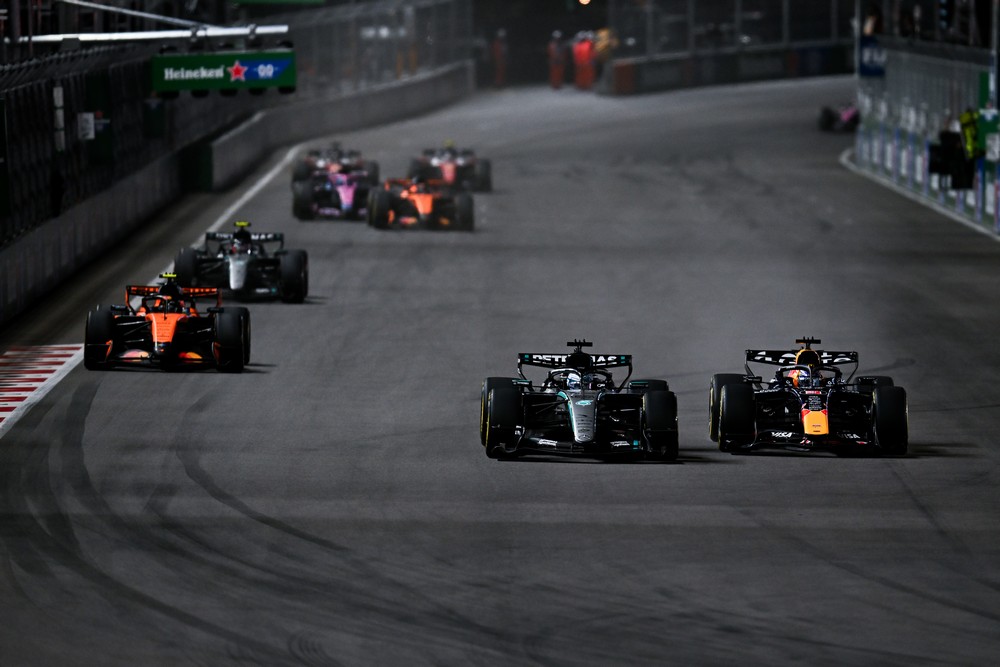
The V8 engines are set to return to Formula One in 2030 after the FIA reached a unanimous agreement with power unit manufacturers. The primary goal is to make the power units cheaper and simpler, with the modern engines being complex, heavy, and expensive. This change will also align the sport closer to the road car industry’s interests. The cars will remain turbocharged, but will have a smaller electric component. Although the next regulation cycle was set for 2031, it was agreed to move the rule change forward by a year. The plans must still be formally approved by the World Motor Sport Council, and the specific details of the regulations still need to be developed.
Cadillac has abandoned plans to introduce its own V6 F1 engine, delaying the project until 2030. This comes after the FIA announced plans to shorten the current regulation cycle by a year and change to the V8 engines. Cadillac’s initial plan was to introduce its own power unit in 2029, but the new timeline means they would only be able to use that power unit for a single season, which would not be cost-effective. As such, the team has extended its current power unit customer agreement with Ferrari.
Valtteri Bottas will retain his seat at Cadillac for the 2027 season. This comes after rumours that former IndyCar driver Colton Herta could join the team as early as 2027. The US-based team has made significant efforts to get Herta the required 40 FIA Superlicence points to make him eligible for Formula One. Bottas signed a multi-year deal when he joined the team for its debut season, but performance gaps compared to teammate Sergio Perez raised questions about whether the Finn would continue his contract.
Rafael Camara will continue his Haas campaign through the rest of the season, likely giving up his chance of winning the Formula 2 championship. The Brazilian is currently leading the championship by seven points over Nikola Tsolov, but two races still remain in the season. Camara, who will drive for Haas full-time next year, made his F1 debut in Brazil when Esteban Ocon was fired after a falling out with the team. The remaining races in Qatar and Abu Dhabi offer an opportunity for Camara to prepare for his rookie season.
The FIA will begin using full-time F1 stewards from 2027, with the intention of recruiting a full panel of 12 to 15 stewards in the coming seasons. This comes as part of an effort to improve the consistency of regulation enforcement, which has been a hot topic in recent years. Full-time stewards will be slowly recruited starting in 2027, being joined alongside the standard lineup of part-time stewards. The number of full-time stewards will increase before eventually reaching the goal. Another benefit of full-time stewards is that it will make it easier to improve the rules and guidelines over time.
Fernando Alonso will participate in the 2027 Dakar Rally during the winter break. He will drive an Aston Martin Dreadnought from January 9 to 23 in Portugal and Morocco. The race was originally planned to be held in Saudi Arabia, but was relocated due to conflict in the region. This will be Alonso’s first appearance in the race since 2020, when he drove for Toyota and finished P13, finishing one of the stages in P2. He will be joined again by co-driver Marc Coma, who also partnered with the Spaniard in 2020.
Stint limits will be enforced again at the Qatar Grand Prix to prevent damage to the Pirelli tyres. Drivers will not be allowed to complete more than 27 laps on a set of tyres, forcing teams to take a two-stop strategy for the 57-lap race around the Lusail International Circuit. This is two laps more per stint compared to last year’s race at the high-degradation circuit.
Formula One has partnered with WHOOP to help bring driver health data into the story. WHOOP is an American wearable technology company that offers a variety of products currently used by athletes. They partnered with Ferrari earlier in the year. As part of the deal, select drivers will wear devices that will allow certain health data, like heart rate, to be used in TV broadcasts, helping to enhance the narrative as it unfolds during the race. This is not the first time this data has been used in motorsport broadcasts. Formula 2 experimented with similar technology in 2023.
Formula One has partnered with Nike, which will become the sport’s official uniform provider. The US-based apparel company will begin supplying F1 staff with apparel and footwear starting in 2027, replacing Puma. The deal also extends to F1 Academy. Outside of the sport, the company will also be releasing various F1-inspired retail collections for fans.
No one set any times during the first free practice session of the Las Vegas Grand Prix. Wet conditions meant drivers only completed some exploratory laps. This limited the running of some rookies who had planned to participate in the session, including Dino Beganovic for Ferrari, Jak Crawford for Aston Martin, and Ryo Hirakawa for Haas.
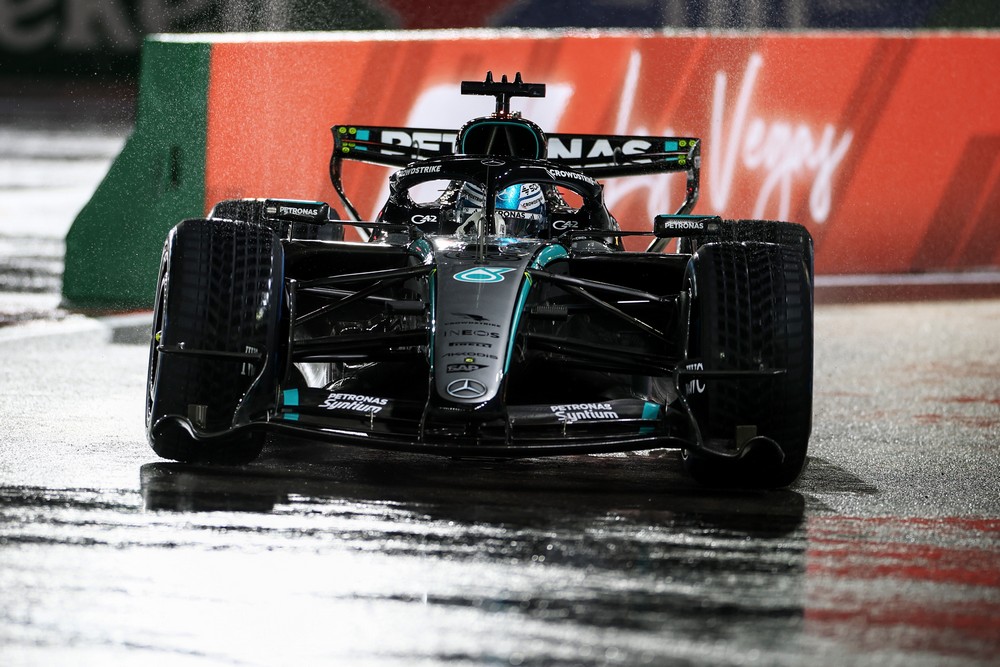
George Russell led the second free practice session, narrowly beating Pierre Gasly. It was essentially the first running of the weekend, with FP1 having been a wash. As such, it was a busy session as teams rushed to make up for lost time. The circuit was still damp from the earlier rain, forcing drivers to start on the wet tyres before transitioning to the intermediates. The session saw a brief red flag near the end to clear some plastic that had found its way onto the circuit. Russell led Gasly by just 0.071s, with Charles Leclerc the only other driver to get even close to the pace of the lead Mercedes. Isack Hadjar was in P4, but some 1.135s behind.
George Russell continued his strong pace in the final free practice session, setting the fastest time in the weekend’s first dry session. The Brit caused a stir during the session for a clash with Max Verstappen. The Dutchman had overtaken Russell, but the two then went wheel-to-wheel into turn 14, making contact and ending with Verstappen nearly being forced into the barrier. Verstappen also had a minor incident with Lando Norris earlier in the session, locking up after overtaking the McLaren driver down The Strip, causing Norris to praise “instant karma” over the team radio. Verstappen was also noted for erratic driving by the stewards near the start of the session for weaving in front of Franco Colapinto. No one managed to set a time close to Russell, with Kimi Antonelli coming closest, some 0.911s back. Norris was third fastest and was the only other driver to get within a second of the pace.
Kimi Antonelli was fastest in qualifying, but it was Max Verstappen who inherited pole position. Antonelli took a five-place grid penalty for changing power unit components earlier in the weekend, dropping him to P6. Neither Ferrari driver managed to make it out of Q2, with Charles Leclerc running deep on his fast lap. George Russell was third fastest ahead of Lando Norris, Isack Hadjar, and Arvid Lindblad, who all moved up with Antonelli’s penalty.
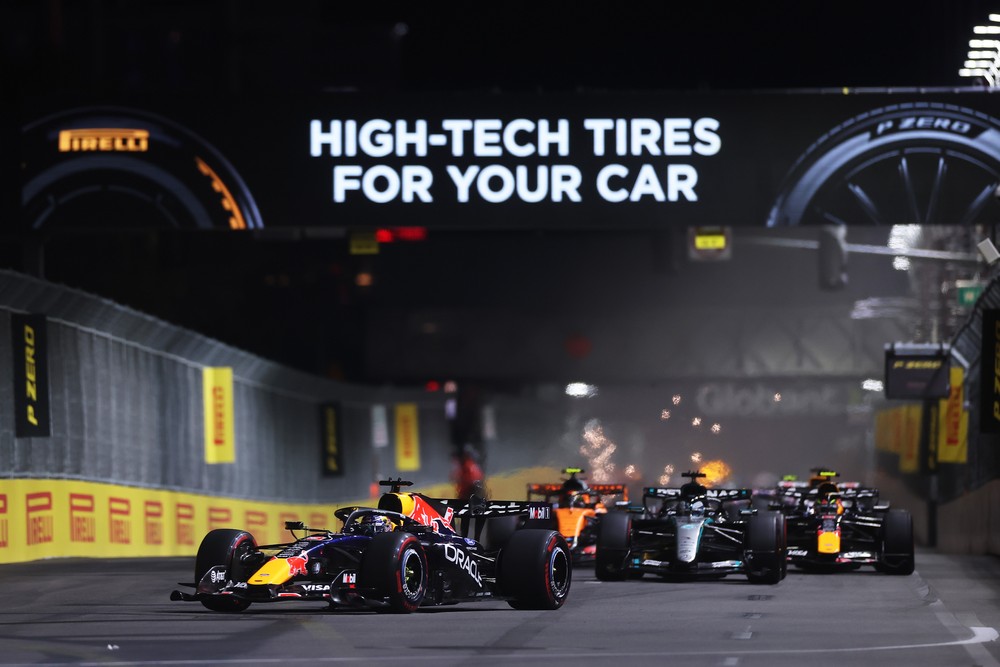
Max Verstappen won the Las Vegas Grand Prix from pole position, but it was one of the closest races in modern times. He had a good start from pole, but failed to create a gap to the cars behind. The opening half of the race saw Verstappen, George Russell, and Isack Hadjar all battle for the lead, in pass-and-repass style racing. One would take the lead down the Las Vegas Strip only to be overtaken again heading onto the main straight. Hadjar appeared faster, but was told to hold position and complied. A collision between Sergio Perez and Rafael Camara at turn 14 brought out the safety car and split the race into two halves. Front wing failure on Hadjar’s Red Bull during the restart dropped him down the order, leaving Lando Norris and Kimi Antonelli to join the fight for the lead. Tensions were high at Ferrari between the two teammates, ending in a collision in the closing stages that put them well down the points. Russell dropped out of the lead battle after locking up on the penultimate lap while trying to overtake his teammate, putting him into the barriers. Antonelli also dropped out of the challenge, running out of battery heading onto the final lap. This left Norris and Oscar Piastri to claim podium positions behind Verstappen, who really escaped threat on the final lap. Click here to read a full summary of the Las Vegas Grand Prix.
With just two more weekends of racing remaining in 2026, the drivers and teams will head to Qatar next for the penultimate round of the calendar. That race will be on the weekend of November 28.
It can be challenging for even the most avid fans to keep up with the fast-paced world of Formula One. The Weekly F1 Recap is a series published each Monday that breaks down the action, both on and off the circuit, into bit-sized pieces. It's perfect for casual and experienced fans alike.