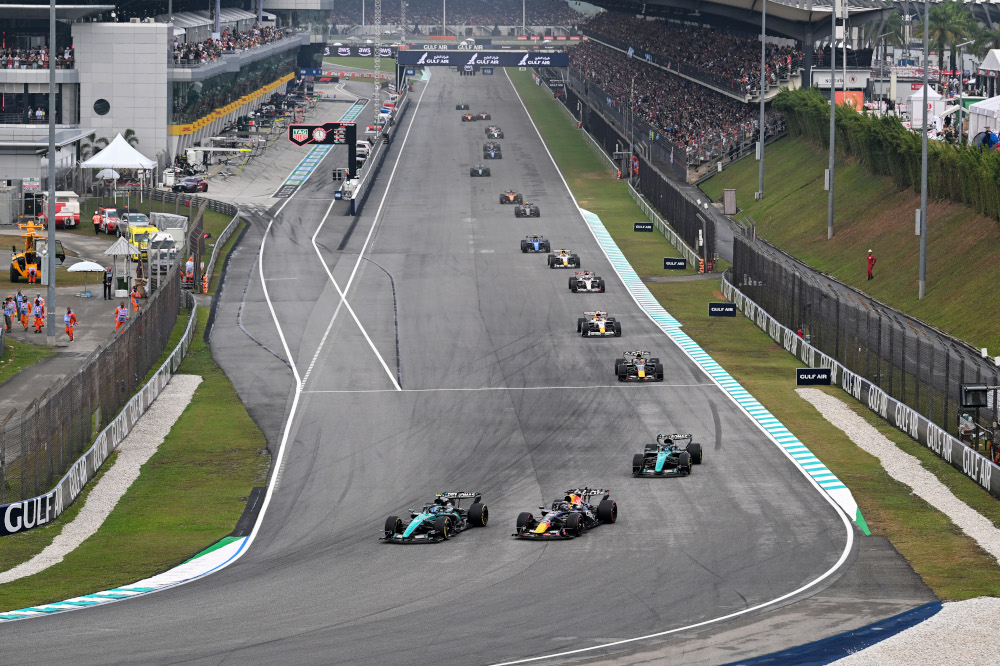
Fernando Alonso extended his Aston Martin contract for 2027, silencing retirement rumours. The 45-year-old two-time World Champion is the most seasoned driver on the grid, with 2027 set to be his 24th season in F1. He joined Aston Martin in 2023. Since that first season, during which he stood on the podium eight times, the team has suffered a significant performance decline. Most recently, the team has been suffering from growing pains during their first season with the Honda power unit. The team also confirmed it will retain Lance Stroll, the son of team owner Lawerance, which is unsurprising as the Canadian is believed to have a rolling contract.
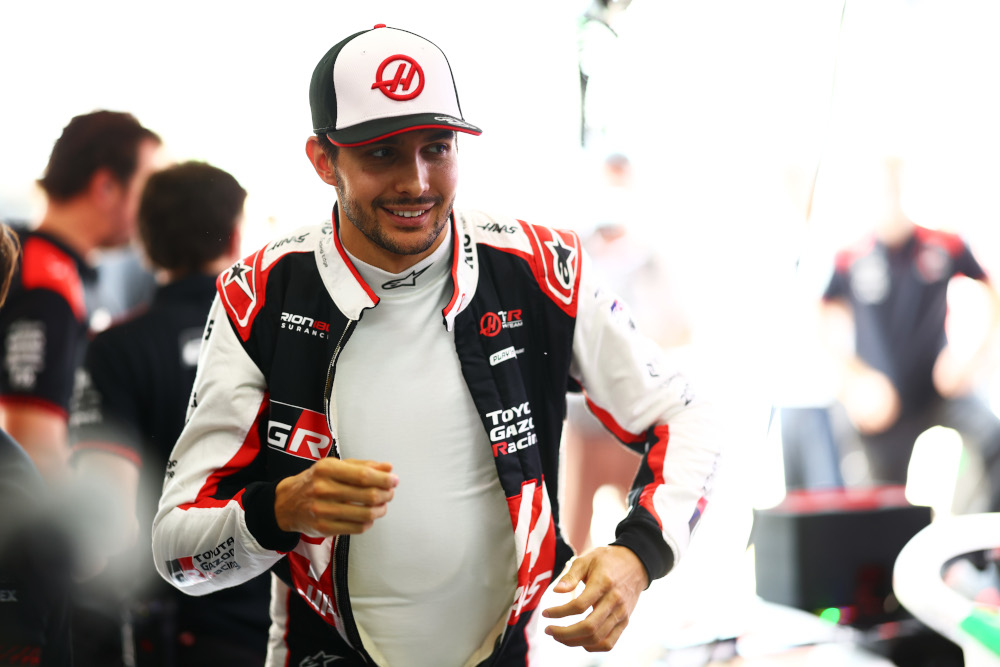
Esteban Ocon will leave Haas at the end of the season, leaving his motorsport future uncertain. Ocon joined Haas in 2025 after departing Alpine, but he has had a rough year and a half with the team. “I leave this project with my head held high and proud of my performances in what were not always the easiest of circumstances for various reasons and factors outside of my control,” he explained in a statement. It’s unclear who will replace the Frenchman at Haas, with reigning Formula 2 champion Leonardo Fornaroli and current Formula 2 leader Rafael Camara believed to be in the running. It’s also unclear where Ocon’s career will go next, with few opportunities currently open in F1. It was rumoured that he would join Toyota’s World Endurance Championship programme, but Toyota has since denied these rumours.
Audi has announced plans for a new facility near its existing factory in Switzerland. Its current home base in Hinwil needs significant investment to modernize it, having been run on a tight budget since ownership of the team was returned to Sauber from BMW in 2010. Audi has since taken ownership of the team in 2025. Although some elements of the new campus became operational this summer, full development is set to be completed in 2030. Audi’s engine team will remain in Germany, and the team will continue to operate its satellite facility in the UK.
Max Verstappen will return to GT3 for a race in Portugal. The Singapore Grand Prix will mark the end of an F1 triple header, giving the drivers a week off. Verstappen will use that time to race in the GT World Challenge series in a Mercedes-AMG GT3 entered by 2 Seas Motorsport. The three-hour race will mark the end of the European series and will also be raced by MotoGP icon Valentino Rossi in a BMW. This will be Verstappen’s first GT3 outing since the Nürburgring 24 Hours in May.
Max Verstappen set the pace in the first free practice session of the Bahrain Grand Prix weekend at the Sepang International Circuit in Malaysia. This practice session gave teams an opportunity to relearn the circuit that last hosted a Formula One race in 2017. It was hot and humid, creating suboptimal conditions for the drivers. George Russell was the second fastest, finishing ahead of Isack Hadjar. Lap times were spread at the front of the field, with Charles Leclerc being the only other driver to get within a second of the pace set by the lead Red Bull.
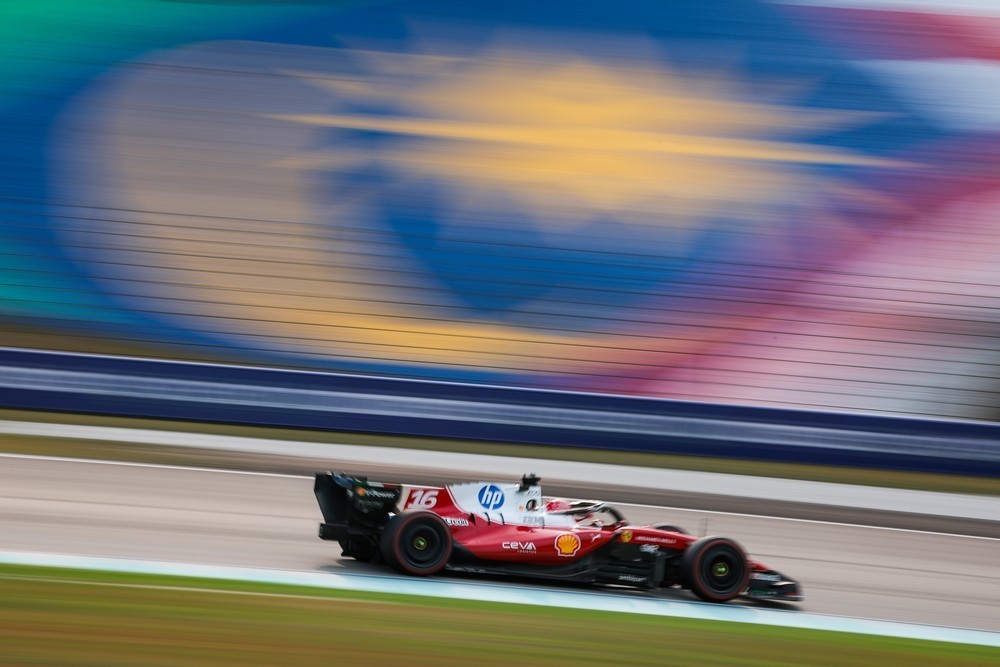
Charles Leclerc was fastest in the second free practice session on Friday afternoon, beating Isack Hadjar but just under a tenth of a second. It was a busy session as dark clouds loomed overhead, with teams rushing to complete their programmes before the forecasted shower. Many drivers transitioned quickly to the soft tyres to complete some fast laps. As the session ticked on, the skies cleared and the threat of rain reduced. Lewis Hamilton caught the attention of the stewards, impeding Gabriel Bortoleto, with the Brit complaining he could not see in his damaged right-side mirror. Ferrari was fined €10,000 after the session for failing to notify Hamilton of the incoming Audi over the team radio. Bortoleto went on to bring out the virtual safety car in the closing minutes of the session after pulling to the side of the track with a mechanical issue.
Kimi Antonelli topped the final free practice session, out-pacing both of the Red Bulls. It was a relatively quiet session, with drivers completing far fewer laps than during the previous two sessions. The red flag was waved near the halfway point for debris, which had come from Oliver Bearman’s Haas. The timesheet shuffled when action resumed, as drivers rushed to set some lap times. George Russell was fourth fastest ahead of the two Ferraris and two McLarens.
Max Verstappen returned to the top of the timesheets in qualifying, earning his first pole position of the season ahead of Lewis Hamilton. From the start, Verstappen was the driver to beat, topping all three qualifying sessions. Only 14 drivers participated in Q2, with Franco Colapinto and Arvid Lindblad both sitting out the session due to grid penalties. Colapinto dropped five places for a collision in Azerbaijan and ten for a power unit change. Lindblad lost 30 places for a power unit swap. Isack Hadjar would also take a five-place penalty for a power unit change, which was disappointing since he had qualified P3. This promoted Kimi Antonelli to P3 alongside Charles Leclerc.
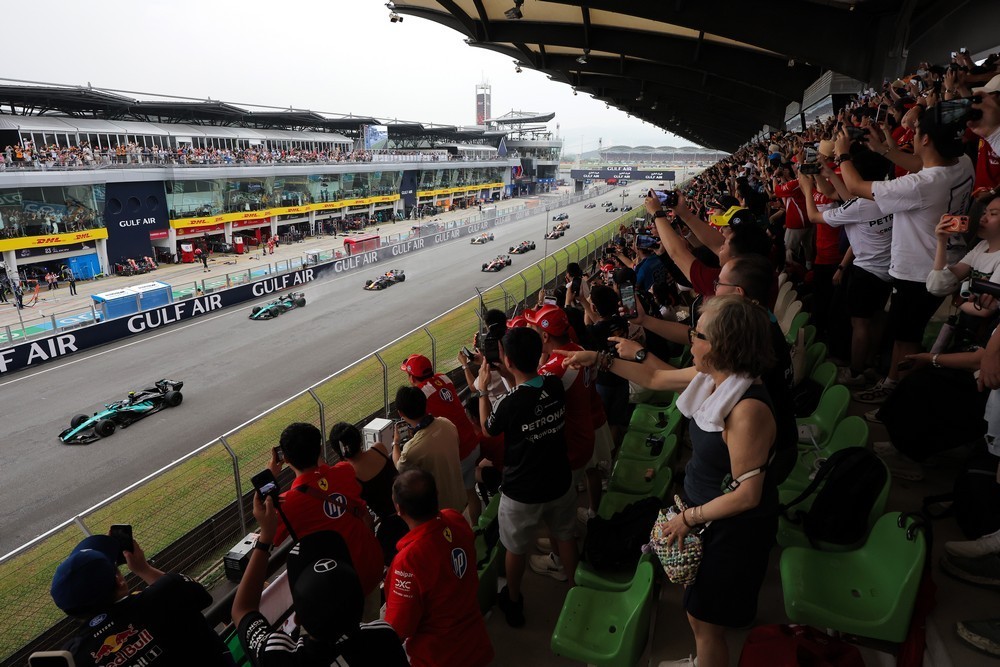
Max Verstappen converted his first pole of the season into his first win of the season in a race held in mixed conditions. The race start was delayed by more than an hour and a half, first for rain and then to correct a bizarre software bug that left multiple cars limping on the first formation laps. By the time the race was ready to start, the circuit had dried enough for some drivers to gamble on the slick tyres, but this ultimately left them struggling for grip as they plunged down the field. Verstappen had a poor start, allowing both Mercedes drivers to take the lead, although Verstappen returned to P2 a few laps later. The slick tyres quickly became the faster tyre. At the same time, Valtteri Bottas brought out the safety car by spinning in turn 14, allowing the entire field to change to slicks, while also bringing the original slick starters back into the race. Verstappen retook the lead on the restart, and Antonelli dropped behind his teammate, although he would climb back to P2 later. With around ten laps remaining in the race, the virtual safety car was deployed to clear Alex Albon’s stricken Williams, which had suffered a gearbox failure. This was upgraded to a full safety car, again bunching up the field. Russell would not take the restart, as his Mercedes suffered a power unit issue behind the safety car, delaying the restart. Once the race restarted, all eyes were on the battle between Isack Hadjar and Lewis Hamilton for the final podium-scoring position. Hamilton was one of the drivers to gamble on the slicks at the start, but he did a good job of charging back through the field once conditions improved. Hamilton would get by Hadjar before the end to stand on the podium. Click here to read a full summary of the Bahrain Grand Prix in Malaysia.
Next on the calendar is the final race in this ongoing triple header. The teams will head to Singapore for the venue’s first sprint weekend. The racing action starts on the weekend of October 11.
It can be challenging for even the most avid fans to keep up with the fast-paced world of Formula One. The Weekly F1 Recap is a series published each Monday that breaks down the action, both on and off the circuit, into bit-sized pieces. It's perfect for casual and experienced fans alike.