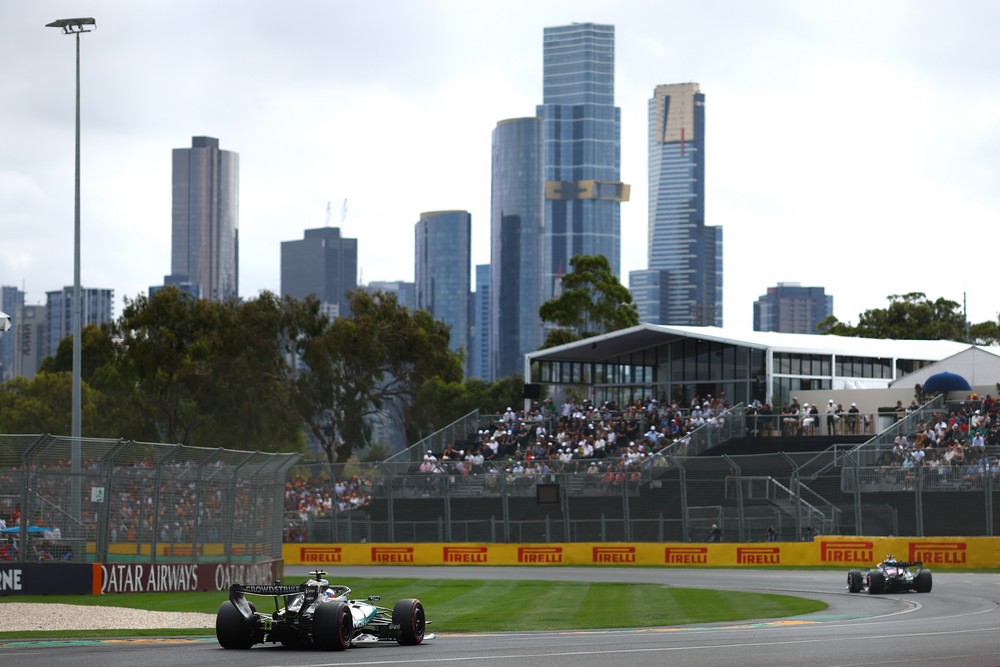
Formula One, FOM, and former F1 leader Bernie Ecclestone have been ordered to pay £250,000 for legal costs in Felipe Massa’s 2008 championship lawsuit. The retired Brazilian F1 driver has sued the parties for £64m in damages after losing the championship title to Lewis Hamilton by a single point. The lawsuit revolves around “Crashgate”, when Nelson Piquet Jr intentionally crashed at the Singapore Grand Prix to help Fernando Alonso win the race. In an interview, Ecclestone admitted that he and the late FIA president Max Mosely learned about the controversy but decided to preserve the sport’s reputation by not acting on it. Massa is seeking compensation for lost contracts, sponsorships, and other earnings that could have come had he won the championship in 2008.
Alex Dunne has joined the Alpine Academy for 2026. The 20-year-old Irishman was a member of the McLaren Driver Development Programme, but was dropped last year. After some success in Formula 4 and Formula 3, Dunne joined Rodin Motorsport for his debut Formula 2 season last year. After finishing fifth in the championship, he will remain with the Rodin for 2026, now with Alpine’s backing. He is one of three Alpine Academy drivers on the Formula 2 grid, with Kusk Maini and Gabriele Mini also racing in the series.
Petronas’ sustainable fuel, used to power the Mercedes engines, was finally approved by the FIA on the eve of the season-opener. The delay is believed to have been caused by the complexity of the new homologation procedure introduced this season to regulate the new sustainable fuel. This season sees stricter oversight, with an external body inspecting the entire production process. Petronas fuel is used by all Mercedes-powered cars, which include Mercedes, McLaren, Williams, and Alpine.
The FIA revealed some tweaks to its driving standards guidelines ahead of the opening race of the 2026 season in Australia. In addition to adding leniency in the awarding of penalty points, the FIA also added further guidance for judging overtakes in response to some incidents last season. The new guidelines now understand that the driver being overtaken cannot just “disappear” and that lock-ups and small steering corrections are not necessarily because the driver lost control of the car. It could mean that the driver is trying to avoid a collision. Additionally, defending drivers who leave the track limits and rejoin ahead will be considered to have gained a lasting advantage and should concede the position. However, these are just guidelines, and the stewards are still free to make their own judgments.
The FIA decided not to enforce team curfews on Wednesday and Thursday night, at the request of the teams. The FIA cited “force majeure” related to travel and freight disruptions caused by the ongoing military conflict in the Middle East. To prevent teams from working too many hours during the race weekend, the FIA enforces curfews on Wednesday and Thursday evening, during which team members cannot be working in the paddock. These curfew periods are from Wednesday 6:30 pm to 7:30 am and Thursday 6:30 pm to 8:30 am, local time. The sport will continue to monitor the ongoing conflict, as the sport prepares to head to Bahrain next month.
The FIA initially removed one of the five “straight mode” zones from the Australian Grand Prix, but reverted the decision after pushback from the teams. This year, the DRS has been replaced with a new active aerodynamics system that allows drivers to open the front and rear wings (called “straight mode”) in five predetermined zones. After Friday’s two practice sessions, some drivers commented that activating straight mode in the high-speed sector between turns 8 and 9 could be risky, especially in traffic. In response, the FIA unilaterally decided to remove this zone ahead of the final free practice session. However, the decision was quickly reversed before the start of the session.
A new “pre-start” procedure was implemented ahead of the Australian Grand Prix to help prevent start issues. With the MGU-H removed from the car for this season, drivers noted during pre-season testing that the engine needed more revs to get the turbocharger working. This could lead to slow starts and a high risk of entering anti-stall. To combat this, the starting procedure was revised to include a new five-second delay to the start, during which a blue “pre-start” message flashes next to the starting lights. This aims to give drivers at the rear of the grid ample time to prepare their cars for the start.
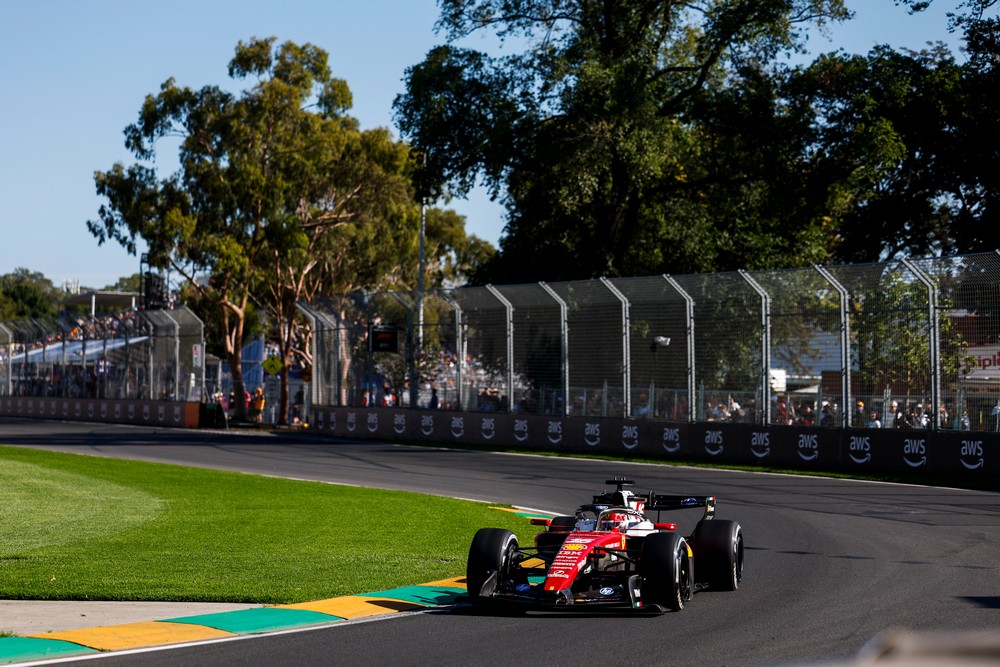
Ferrari went quickest in the first free practice session of the Australian Grand Prix, with Charles Leclerc getting the time to beat. Only 21 cars participated in the session, with Fernando Alonso sitting out the session with a power unit issue on his Aston Martin. Lance Stroll was on track early in the session, but managed only three laps. Lando Norris was another driver to have his session cut short by technical gremlins after only seven laps of running. Arvid Lindblad came to a stop, prompting a virtual safety car, although he returned later in the session. Despite his issues, he had a strong session to finish in P5 behind the two Red Bulls.
Oscar Piastri led the way in the second free practice session on Friday, outpacing the two Mercedes cars led by Kimi Antonelli. There was drama early on for George Russell in the other Mercedes, clipping his front wing on Arvid Lindblad as the Brit tried to force his way into the queue. Max Verstappen was another driver who had issues in the pit lane, coasting to a halt at the pit exit before being wheeled back to the garage by his team. He also suffered a high-speed trip through the gravel in turn ten during the closing minutes of the session, damaging the floor of his Red Bull, but not before going sixth fastest. Lance Stroll and Carlos Sainz also suffered from technical faults late in the session, as did Sergio Perez, who had spent most of the session trapped in the garage with a sensor issue. He failed to set a time after just three laps. Ferrari again showed strong pace, rounding out the top five with Lewis Hamilton the quickest of the pair.
George Russell was the fastest in the final free practice session of the weekend by some margin over the two Ferrari cars, again led by Lewis Hamilton. It was a troubling session on the other side of the Mercedes garage, as Kimi Antonelli suffered a huge shunt in turn two. He appeared to take too much kerb at the apex, leaving his team with a lot of work to do ahead of qualifying as he slammed into the barriers. The growing pains continued for teams, as further technical issues showed themselves. Carlos Sainz’s Williams came to a halt at the pit entry, ending his session. Alex Albon appeared to briefly have an issue in the other Williams, but was able to get going again. Lance Stroll had the worst session of them all, failing to make an appearance due to an issue with the internal combustion engine on his new Honda power unit. Oscar Piastri finished the session with the fourth quickest time, although he failed to get within a second of Russell’s pace. Isack Hadjar led a Red Bull 5-6 result.
George Russell continued his strong pace to dominate all three qualifying sessions and earn the first pole position of the season in a Mercedes front-row lockout. There was drama early in Q1, as Max Verstappen crashed out of the session at the first corner. The Dutchman locked his rear axle under braking, sending him skidding through the gravel and into the barrier. This guaranteed he would start at the rear of the grid alongside Carlos Sainz and Lance Stroll, both of whom sat out the session with mechanical issues. The start of Q3 was slightly delayed, as Gabriel Bortoleto’s Audi came to a halt in the pit lane, while Arvid Lindblad had a near-miss after locking up at pit entry. The session was red-flagged early on after a cooling fan that had been accidentally left on Kimi Antonelli’s sidepod fell onto the circuit and was later run over by Lando Norris, exploding into a cloud of plastic. Mercedes was later fined €7,500 for the unsafe release, explaining that the team member usually responsible for removing the fan was occupied with another task. As Q3 came to an end, Isack Hadjar found himself in an impressive P3, lining up beside Charles Leclerc behind the two Mercedes. Oscar Piastri was the quickest McLaren, with Lando Norris and Lewis Hamilton right behind.
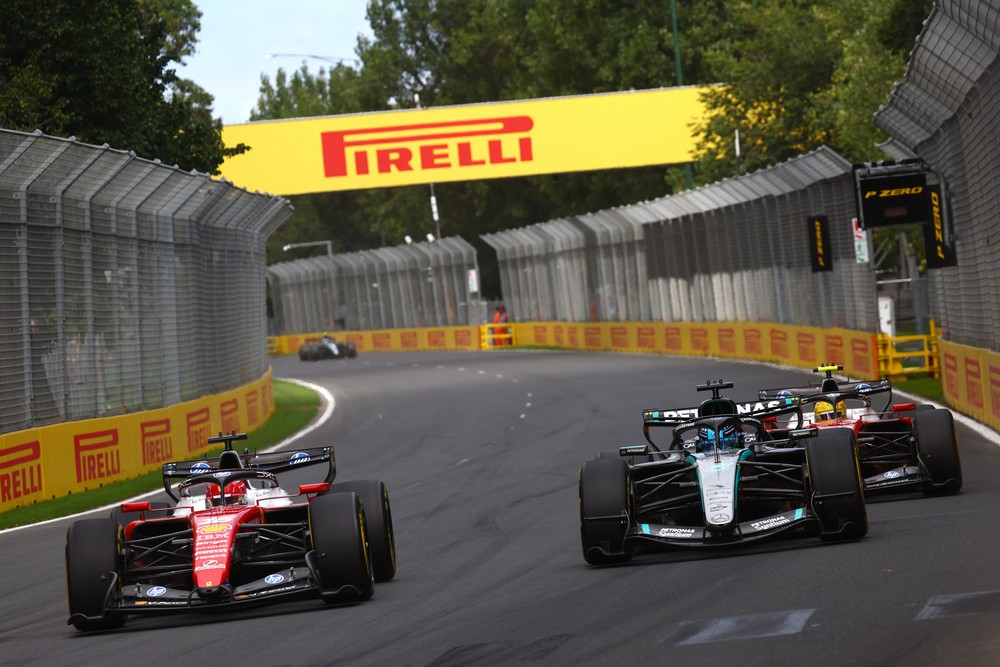
Mercedes converted its front-row lockout into a 1-2 finish, but it was not without its challenges. Trouble started before the race did, with Nico Hulkenberg and Oscar Piastri both failing to start the race. The former was wheeled off the grid with a technical issue, while the latter crashed into the barriers on the reconnaissance lap. Both Mercedes cars had a bad start at the front of the grid, with Kimi Antonelli suffering the worst wheel spin and dropping to P7. This allowed Charles Leclerc to weave his car through to the lead of the race at the first corner. What ensued was a multi-lap epic, with the duo swapping the lead multiple times in the opening laps. It turned into a three-car battle, with Lewis Hamilton joining, but was neutralized by the virtual safety car for an engine failure on Isack Hadjar’s Red Bull. Mercedes took the opportunity to make their only pit stop of the race, while Ferrari stayed out. They stayed out during the second VSC as well, which had been deployed for Valtteri Bottas’ stopped Cadillac at the pit entry. Finally, Leclerc pitted on lap 25, with Hamilton going on lap 28, putting the two Ferraris some 15 seconds behind. Max Verstappen, who had made a great recovery from the back of the grid, was challenging Lando Norris after a third virtual safety car from debris from Sergio Perez. This forced Norris into making a second pit stop, but Verstappen rejoined behind Norris again when he made a second pit stop ten laps later. There was not enough time in the race for Verstappen to catch back up, settling for P6 and the Driver of the Day title. Click here to check out our full summary of the action from the Australian Grand Prix.
The Formula One racing action is just getting started, with the drivers set to return to racing next weekend for the Chinese Grand Prix.
It can be challenging for even the most avid fans to keep up with the fast-paced world of Formula One. The Weekly F1 Recap is a series published each Monday that breaks down the action, both on and off the circuit, into bit-sized pieces. It's perfect for casual and experienced fans alike.