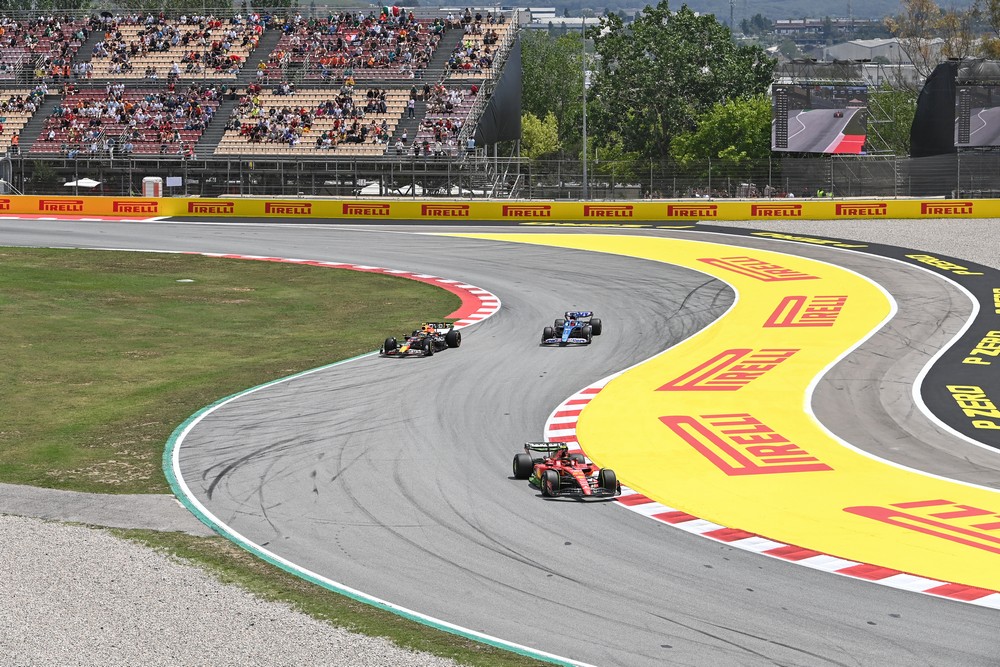
The Circuit de Barcelona-Catalunya has signed a new six-year rotating deal to host an F1 race. The circuit, which has already lost its Spanish Grand Prix title to the new race in Madrid, was set to host its last F1 race this year. However, a new deal with the sport will see the circuit host races in 2028, 2030, and 2032, alternating with the Belgian Grand Prix at the Circuit de Spa-Francorchamps. The Circuit de Barcelona-Catalunya has been the home of the Spanish Grand Prix since it took over hosting duties from the Circuito de Jerez in 1991.
Long-time Red Bull chief designer Craig Skinner has left the team. Skinner, who joined the team in 2006 as a CFD Engineer, climbed through the ranks to eventually reach the role of chief designer. It’s unclear why Skinner decided to leave the team, nor is there any indication of any future plans for him or who will replace him on Red Bull.
Audi has signed Ralph Boschung as its development driver. Boschung raced in Formula 2 from 2017 to 2023, announcing his retirement at the end of 2023. Although he’s no longer racing, he has worked with Sauber as its simulator driver for 2024 and 2025. Audi, which has taken over the Swiss team this year, decided to retain the 28-year-old for another year, although he is not part of the Audi Driver Development Programme.
Power unit manufacturers will vote on whether additional engine testing should be done during the summer break to close a potential engine compression loophole. The compression ratio was reduced from 18:1 to 16:1 for 2026, but it is measured at ambient temperature. This has led some teams to accuse Mercedes of exploiting this rule by using materials that will expand at operating temperature, leading to a larger engine compression ratio. One option on the table is to perform mandatory testing at 130°C during the summer break or ahead of the 2027 season. This motion must be approved by the Power Unit Advisory Committee and requires support from four of the engine manufacturers as well as the FIA and FOM.
Formula One is reportedly considering increasing the number of sprint races per season to twelve. Currently, there are six sprint weekends per season, but this may increase as early as 2027. This is an effort to provide fans with competitive sessions for all three days by providing sprint qualifying on Friday instead of just two free practice sessions. But sprint weekends also provide less practice time for inexperienced drivers, which is why the sport may consider adding more practice to the sprint weekend format.
Formula One will hit the big screens in the United States as Apple TV takes over the US broadcasting rights. Five races will be broadcast live at select IMAX theatres in 50 locations across the United States in 2026. These will include the Miami, Monaco, British, Italian, and United States Grand Prix.
Lawrence Stroll is set to buy the rights to the Aston Martin name, as the British car company warns of larger financial losses than expected. The £50m deal will grant the Aston Martin F1 Team exclusive perpetual rights to the “Aston Martin F1 Team” name. This comes less than a year after the car company signed an agreement to sell its stake in the team to an undisclosed investor. Importantly, this naming deal shows the team has a long-term commitment to Formula One.
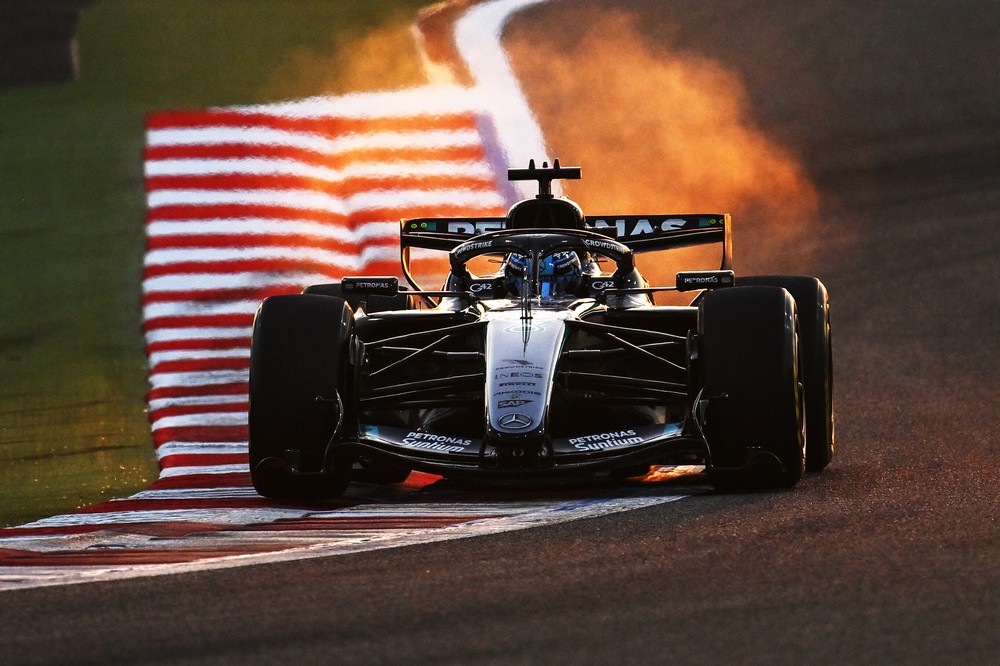
The final pre-season test in Bahrain was held this week, with Mercedes narrowly setting the pace on the first day over McLaren. Charles Leclerc set the pace in the morning, but his teammate Lewis Hamilton spent a portion of the afternoon trapped in the Ferrari garage with an issue. They were far from the only team with issues. Red Bull had engine cooling issues, meaning that Isack Hadjar, who was the only driver to pull double-duty, would complete only 66 laps. Aston Martin had a power unit issue in the afternoon, spending four hours in the garage, only for Lance Stroll to spin into the gravel due to a technical failure. Cadillac also lost some time at the start of the morning and afternoon sessions with sensor issues.
Mercedes retained its top spot on the second day of testing, again narrowly beating the McLarens. Ferrari caused the most stir in the session, debuting a new rear wing that rotates 180 degrees between aero modes. It’s an interesting take on the active aero regulations. Unfortunately, the team was virtually unseen in the morning due to a chassis issue, but managed to return for the afternoon. Audi also suffered some hydraulic issues, limiting Gabriel Bortoleto’s running to only 29 laps in the morning. Aston Martin also had another day of technical woes, stopping on the track with a battery issue in the afternoon.
Ferrari rebounded from technical issues on the two previous days to top the final test session of the pre-season, logging an impressive 132 laps. Mercedes, which had been the team to beat in the previous days, struggled in the final day, suffering a mechanical failure in the morning that forced the team to replace the power unit. Aston Martin’s struggles continued, being forced to limit their running due to a shortage of parts. Lance Stroll recorded only six laps behind the wheel in the afternoon before calling it a day. It seems they will have a lot of work to do ahead of the season opener in Australia in two weeks.
The final graph aims to show how much each team has improved relative to the rest of the teams using a statistical measure called z-score. This analysis was conducted using the fastest overall time of each team in 2026 and 2025. The average fastest lap in 2026 was slower than in 2025, which is to be expected as a result of the regulation changes. Zero marks the average that all teams have improved relative to other teams. Teams with a positive value indicate that the team has improved more than the average, while a negative value indicates the team has progressed less than the average. However, many factors can impact this measure, since teams rarely push their cars to the true limit during testing. Because of this, this measure may not accurately reflect the car’s true performance during the season.
* Audi participated in the 2025 as Sauber
It can be challenging for even the most avid fans to keep up with the fast-paced world of Formula One. The Weekly F1 Recap is a series published each Monday that breaks down the action, both on and off the circuit, into bit-sized pieces. It's perfect for casual and experienced fans alike.