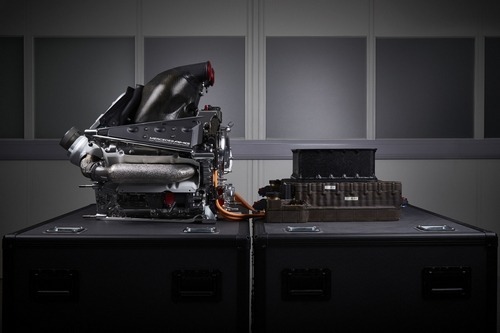
The upcoming Formula One season could prove to be problematic for most teams thanks to the new tighter power unit component usage restrictions. These new limits were put in place to help reduce costs but could end up penalizing teams even more.
While nothing major has changed with the 2018 power unit compared to the 2017 season, the regulations surrounding power unit allocation have been completely overhauled. Tighter regulations mean that the F1 teams will have fewer power unit components in stock to use throughout the course of the season, despite the season being longer than last year.
F1 power units are split up into six distinct components: the internal combustion engine (ICE), turbocharger (TC), motor generator unit heat (MGU-H), motor generator unit kinetic (MGU-K), the control electronics (CE) and energy store (ES). In 2017, the teams could use four of each component throughout the season before receiving penalties for every additional component used.

In 2018, teams will now only have access to three ICE, TC and MGU-H components and just two MGU-K, CE and ES components. The intention is to limit the amount of money that the teams much spend in the season, by reducing the amount of power units that a customer team needs to buy from an engine supplier. But does that really make a difference?
In 2017, only half of the drivers on the grid managed to finish the season within the power unit allocations, with the other half forced to take grid penalties to use additional components due to increased wear or engine failures. And none of the teams in 2017 would have complied with the 2018 regulations, although some could have surely stretched their supply a bit longer than they did.
But the big problem is that just because the regulations say that you can only use a certain number of power units, doesn’t mean that you will use that many. If you are unlucky or run a little harder than expected, you will end up needing more components.
To make matters worse, the penalty system for additional power unit usage has been revised. In 2017, if you needed more components, you could get another power unit and use one component from that power unit for a ten-place grid penalty. If you needed to borrow some additional components from that new power unit throughout the year, you could do so, but it would cost the team five places on the grid per component they borrowed. If they needed to get another power unit for more parts, it would cost them an additional ten places on the grid.
Those regulations have changed. Now when a team goes over their power unit component allocation, they will be given a ten-place grid penalty if that is the first time that they have went over the allocation on that specific unit. Each time they need another component from that allocation, it will cost them another five places on the grid.
This new penalty system could benefit a team that suffers frequent power unit failures related to a specific component, but it will impact teams that just need some extra parts to make it to the end of the season. In 2017, the total penalty for swapping out your power unit for all brand-new components was 35 grid places. In 2018, the cost of taking all new components will be 60 grid places, which is nearly double what it was before.
To put this in comparison, we can compare Fernando Alonso (who used many power unit components in 2017) to Sebastian Vettel (who used just three additional components). Alonso lost a total of 175 grid places in 2017 but under the 2018 penalty system, he would have lost just 170. Now looking at Vettel, he lost a total of 20 grid places in 2017 but would lose a total of 30 grid places under the 2018 penalty system. This shows how the new penalty system could benefit frequent allocation offenders but hinder other drivers.
All this doesn’t really matter though because if you lose more than 15 grid places due to penalties, you will automatically start from the back of the grid anyway. This is a big issue since F1 management still hasn’t addressed the “penalty stacking” issue.
This loophole has been exploited by teams like Mercedes. If a team needs more than two new components at one time, they are going to lose 20 places if these are their first new components outside of the allocation. Given the fact that they are already going to start from the back of the grid, so there isn’t anything stopping them from just taking all new components essentially without consequence.
But at the end of the day, these new regulations aren’t going help reduce costs in Formula One. If anything, it could limit the amount of effort that the teams put into practice sessions because they are too busy trying to make it to the end of the season using the limited engines that they have remaining.
The views and opinions expressed in this article are solely those of the author and do not necessarily reflect the official policy or position of any other agency, organization, employer or company. Assumptions made in any analysis contained within this article are not reflective of the position of any entity other than the author.